
History of UAE: UAE Past and Present
The UAE transformed its desert life into a global hub in about half a century. The change was not a rapid one, but a steady one. Learning about the story of the United Arab Emirates before and after its unification, you will find that it is no less than a miracle. Only this miracle became a reality due to the visionary leadership and timely strategic reinvestments.
If you don’t believe us, you can look at the historical timeline on the Gulf, and it would certainly be clear to you that this wasn’t pure luck or a sudden eruption of wealth. It was a calculated, strategic evolution that started in 1971. Let’s dig into the series of events that followed those years and understand what this region does differently that has taken it to new heights.
A Non-Fiction Account of What the UAE Is and Was
When people talk about the developing nations, especially the heritage-rich and futuristic United Arab Emirates, the conversation almost always starts with numbers.
- A population of around 11.5 million.
- Main industries: Oil, tourism, finance, technology, and trade.
- A GDP of 600 billion dollars.
- A per capita income that crosses 53,000.
- The country has a steady 5 percent annual rise.
- Abu Dhabi is introduced as the capital.
These are the details repeated in reports about the UAE in the past. And why shouldn’t they be discussed? They don’t just sound impressive, and they are.
The only problem is that these figures don’t tell the whole story. They capture what the UAE looks like today, but they leave out how it got here. Behind the fancy details is a history of UAE, pearl divers, desert tribes, and modest trade routes. All these early struggles and humble beginnings slowly transformed into strong suits over the years. And just like the UAE’s own journey, students today rely on an assignment writing service UAE to turn their humble drafts into something worth presenting.
Without them, the country would not have oil wealth, modern skylines, or any global influence at all. So, if you want to understand the luxurious Emirati state, you need both: the statistics of the present and the lived realities of the past.
What Was Life Like in the UAE Before the Union?
Starting from the initial days when neither the oil had been discovered nor the formal unification of 1971 had happened. At that time, this region was known as the Trucial States.
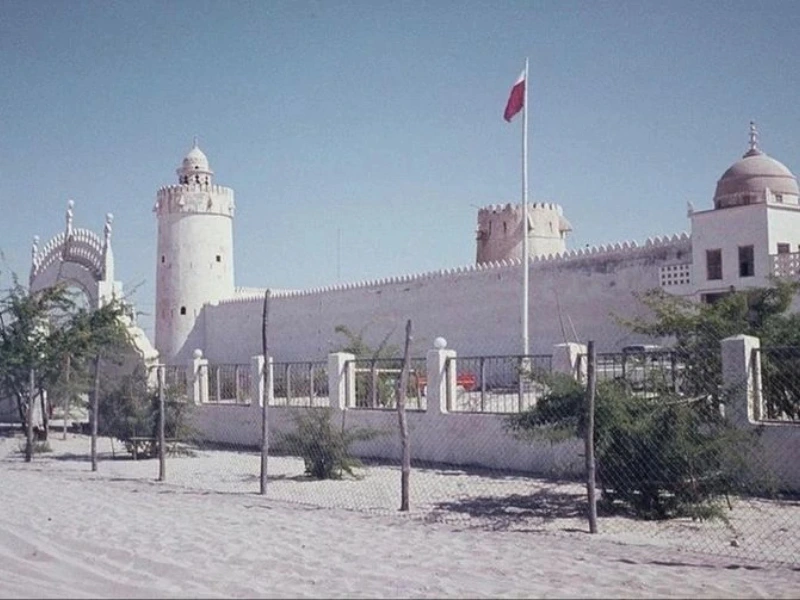
Back then, life was dictated by the seasons and the harsh geography of the Arabian Peninsula. The economy of the land, not surprisingly, was built on three pillars: pearl diving, fishing, and date palm cultivation.
· The Pearl Era
For centuries, the finest pearls in the world came from the waters of the Arabian Gulf. This was a grueling industry. The divers would descend to dangerous depths with nothing but a nose clip and a basket, hoping to find the perfect pearl. This and fishing were the only ways one could feed their families.
· The Bedouin Spirit
Inland, the nomadic Bedouin tribes mastered the art of survival. Based on verified facts from historians, they indeed relied on camels for transport and milk. They also used to move between oases according to the availability of water.
· Architectural Simplicity
Next, if you look at old UAE pictures, notice how there aren’t any concrete or glass houses. All you will see are the ‘Barasti’ houses made of palm fronds or coral stone structures in coastal areas. There also used to be a ‘Barjeel,’ something that is commonly known as the wind tower.
It was the height of architectural innovation back then, serving as a natural air-conditioning system. It channeled cool breezes into the homes below. Last but not least, date palms were essential for survival, too. These are the kinds of details that make UAE’s past so fascinating to study, and exactly the sort of topics students dig into when they seek tourism assignment help to better understand the region’s heritage.
People ate the fruit for energy and used the leaves to build houses and baskets. These trees were the most important resources that helped in turning the face of the UAE from sandy deserts to green homes.
How Did the Discovery of Oil Change Everything?
This period of the UAE past and present, hence, highlights a culture of extreme resourcefulness. Though this did not last long, as the pearl market collapsed in the 1930s and was taken over by Japanese cultured pearls. This left the nation devastated and pushed it into significant economic hardships. It also set the stage for a massive shift that followed.
The exact point in the transformational timeline of the United Arab Emirates before and after was the late 1950s. Speaking of that, note that the first oil was discovered in Abu Dhabi in 1958; however, exports did not begin until 1962. A couple of years later, in 1966, Dubai followed suit and found oil in the offshore Fateh field.
The most important part and lesson of the journey is that this wealth, which started pouring into the UAE, did not immediately result in luxury. Instead, the leadership, especially the late Sheikh Zayed bin Sultan Al Nahyan, channeled these resources into infrastructure. You can even call this era the bridge between a tribal society and a modern state.
‘Wealth is not money. Wealth lies in men. This is where true power lies, the power we value.’
— Sheikh Zayed bin Sultan Al Nahyan.
All in all, the 1960s were a decade of rapid preparation. This was the crucial time when the Trucial States realized that their personal survival was less certain than their collective strength.
What Happened During the Unification Of 1971
The most significant political event in the UAE before and after narrative is the formation of the federation on December 2, 1971. Under the guidance of Sheikh Zayed (Abu Dhabi) and Sheikh Rashid bin Saeed Al Maktoum (Dubai), six emirates joined together.
- Abu Dhabi
- Dubai
- Sharjah
- Ajman
- Umm Al Quwain
- Fujairah
Ras Al Khaimah joined the following year.
How Did the UAE Become a Leader in Space and Technology
All of these bold steps laid an institutional foundation for long-term growth of the country.
- The government established a federal agency called the UAE Space Agency (2014) with financial and administrative independence to oversee all space-related projects.
- They invested billions into space research and technology, launching milestone projects like the Hope Probe to Mars (2020) and satellites such as MBZ-SAT and Thuraya-4.
- Their collaboration with international agencies and universities to accelerate the progress in lunar exploration, Earth observation, and AI-driven space technologies is also a big reason why the UAE is where it is today.
How Has the Education System Evolved in the UAE
The United Arab Emirates before and after the 1970s, saw a total overhaul of how knowledge is passed down. In the early 20th century, teaching was limited to ‘Mutawa’ (traditional tutors) who taught the Quran and basic literacy in ‘Majlis’ settings.
Today, the same place boasts some of the world’s leading educational institutions. Some popular names are the Mohamed bin Zayed University of Artificial Intelligence (MBZUAI), NYU Abu Dhabi, and Sorbonne University. With such high academic standards to keep up with, it is no surprise that many turn to an essay writing service for students to help them stay on top of their coursework.
What Role Did Women Play in The UAE’s Development?
One of the most profound changes in the land is the public role of women. In the past, women were the backbone of the household, managing families and small-scale agriculture while men were away for months at sea pearling. Fast forward to the modern era females are now central to governance and science.
- Women hold nearly 26% to 33% of ministerial positions in the UAE Cabinet.
- The Emirates Mars Mission (Hope Probe) team was 80% female in its science division.
- In 2024, women launched more than 2,000 new businesses. This is a surge of 23% in commercial licenses compared to the year before.
United Arab Emirates Remains a Model for Rapid Development
The evolution of the United Arab Emirates before and after its establishment serves as a massive lesson to civilizations. It is a living proof that with vision, unity, and determination, even a small nation can rise as high as nobody ever expected. So, instead of being intimidated by the challenges, every nation should accept them as opportunities to build a fine future. It also proves that with the best leaders and strategic reinvestment of natural resources, any country can jump over centuries of development in mere decades. All in all, the journey of the UAE has been a rollercoaster ride that brings many lessons for those who wish to learn.

I write blogs for the Assignment Master AE. My focus is on empowering students through actionable advice, writing tips, and study support. I try to share educational insights that make complex topics easier to understand and apply.