
Techniques To Boost Focus During Study Sessions
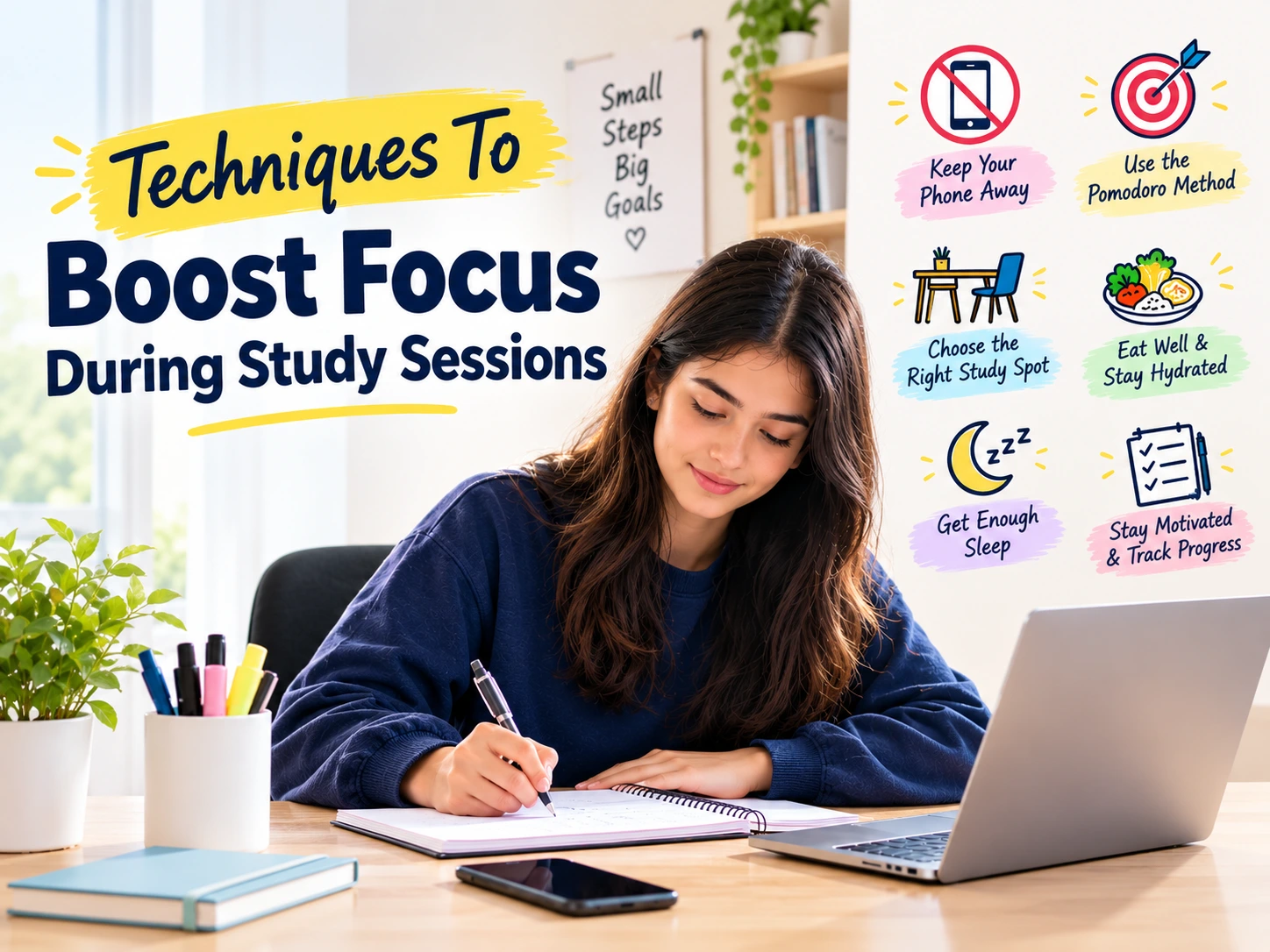
Most students know exactly what they’re supposed to be doing when they sit down to study, but somehow end up doing something else for half the evening. One quick look at a message turns into twenty minutes in a group chat, and then it’s already dinner time. This blog covers some Techniques To Boost Focus that are easy enough to start tonight, with nothing to buy and nothing complicated to set up.
Where Should You Actually Sit to Focus Better?
If you are studying on your bed, then move. When people ask how to focus while studying, this is the first thing worth fixing, and it’s boring, but it works. Your brain treats a bed as a place for sleep, so it keeps trying to sleep. A chair and a table are better. Even sitting on the floor against a wall is better.
Then deal with the phone. Not in your pocket, not face down next to the laptop, but in another room. If you can’t trust yourself, hand it to a flatmate or a sibling for an hour. It’s bothersome for about five minutes, and after that it works better than any app.
Clear the desk too. Keep the book, notes, and water. Anything else should not be there.
Does the Pomodoro Method Actually Work for Everyone?
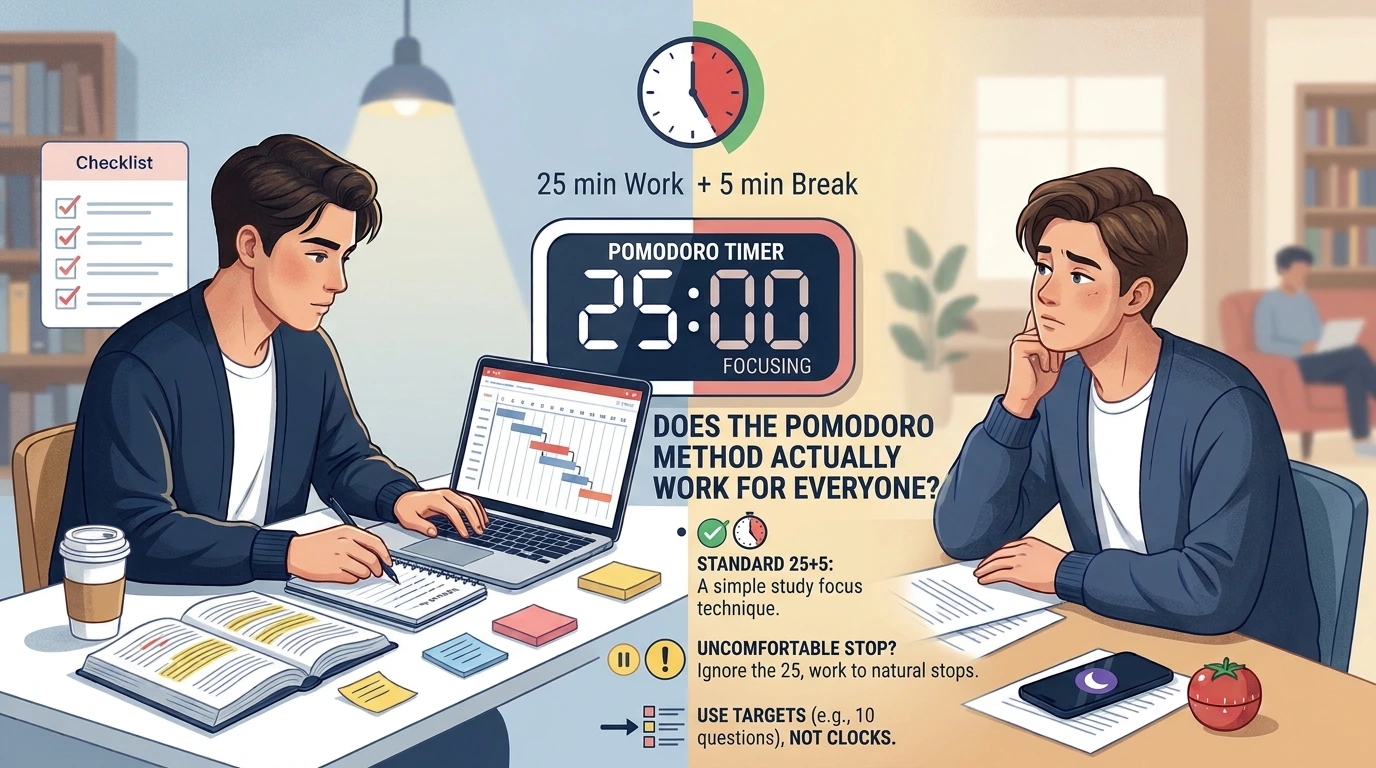
The Pomodoro method is extraordinary in its difficulty of execution compared to other methods of concentration. The Pomodoro method is a simple study focus technique. Basically, you work for 25 minutes and then rest for 5 minutes. You can repeat it 4 times, and after that, take a longer break. The timer is really helpful because it doesn’t let you make excuses.
Some people can’t stand it, especially when the alarm goes off right in the middle of a good session. If that’s you, ignore the 25 and work until you reach a natural stopping point. Another way is to use a target instead of a clock. Ten practice questions, then a break. Whatever you choose, write down the time you started. It sounds detailed, but it gets you moving.
How Should You Prepare in the First 5 Minutes Before Studying?
Techniques to boost focus are described as things you do during a session, but the way you begin matters just as much.
Decide what you’ll finish, in one line, on paper. “Read pages 40 to 55 and make notes” is far better than “do biology”. Then decide where you’ll sit and when you’ll start, and go. Some students like a short walk first. Others find it a waste of time. Try it once and see which group you’re in.
Why Do You Feel Sleepy While Studying in the Afternoon?
When students ask how to concentrate on studies in the afternoon, check those before blaming willpower. A cola and a white bread sandwich will make you sleepy by three. Rice, eggs, and some vegetables, with a proper glass of water, are less exciting but help you study for a longer duration.
Also put your hardest subject in your best hours. Early riser? Do maths at 7 am. Night owl? Do it at 10 pm and don’t feel guilty about it. Save referencing and tidying notes for when you’re running on empty.
Music is personal. A few people need silence, and others like soft instrumentals. Try both for a week.
How Do You Study When You Have Zero Motivation?
They’ll come, so plan for them. Waiting for motivation doesn’t work because it’s unreliable. So try to just start working on those days. If you don’t work a lot that day, you still started, and that counts.
Make a list of everything you have finished doing, even if it’s as small as writing a page of notes or drafting a paragraph. This way, if you’re having an off day, you can look at that list and see that you haven’t fallen as far behind as you think. Even if you miss a whole day, no problem. Start again tomorrow. Don’t turn one bad day into a bad week.
How Can Sample Papers Help You Handle Heavy Workloads?
Sometimes the problem isn’t focus at all. You’re just buried. Three assignments due, a shift at work, and something going on at home. In that spot, some students turn to university assignment writers mainly to see how a finished paper is structured, and then write their own version from there. That’s a fair way to use it, as long as you read the sample carefully and don’t copy it.
Talk to your tutor as well. Students forget they can do that, and a short, early email often gets you a few extra days.
What Should You Look for When Seeking Outside Academic Help?
A lot of students in the UAE search for Dubai assignment help when they have difficult subjects or are running out of time, which is also perfectly fine. However, make sure you choose the right company. Check reviews, ask them if they are providing a plagiarism report, and make sure the company is following the guidelines. After all, cheap and fast often means that it’s not original work.
FAQs
Is studying at night bad?
Not if it works for you. Plenty of people do their best reading after 10 pm. The trouble starts when night study eats into your sleep and the next morning is a write-off.
Why can’t I start working some days?
Usually because the task looks too big. So, just shrink it. Instead of “write the essay”, try “write the first paragraph”. That’s easier to begin, and starting is the hard part.
How long should one study session be?
About half an hour to forty-five minutes for most people. Just starting? Go for 15. Honestly, stopping while you still have a bit of energy left is smarter than pushing until you’re wrecked.
What if I can’t focus at all today?
Give it ten minutes and see. If it’s still a no, switch to something easy like cleaning up your notes, and try again tomorrow. One bad day isn’t a problem.
What Is the Bottom Line?
Increasing your concentration does not necessarily require significant changes in lifestyle. Keeping the phone away, establishing specific endpoints for each study session, using timed sessions with appropriate breaks, and sleeping enough will solve most of the obstacles to success in this area and will contribute to obtaining desired results in a couple of weeks. Everyone’s mind works differently, so it is really worth trying a few techniques that can help you pay attention and get rid of those that feel strange to you. It is a good idea to begin using one or two techniques and incorporating new methods into your study routine when you get used to the initial ones.

I write blogs for the Assignment Master AE. My focus is on empowering students through actionable advice, writing tips, and study support. I try to share educational insights that make complex topics easier to understand and apply.