
What Are Tactile And Kinesthetic Learning Styles?
A 2026 nursing study found that ‘hands-on’ learners scored 91.5% on physical tests, while others scored 84.6%. This means students can likely crush their practical exams through this style, but wait… There is more than what meets the eye!

The students who were the best at handling stress and staying in school didn’t just ‘do’ it. They combined the best of all approaches. You can call it – The Big Three:
- Watch it: Look at pictures or videos, such as on YouTube
- Hear it: Listen to the explanation you get from an academic help
- Do it: Practice it all with your hands for first-hand experience
Mixing these three proven styles makes you much stronger and tougher than the average student. After all, by using your eyes, ears, and hands together, you engage the three major sources of absorbing information in the brain.
Are Tactile & Kinesthetic Learning Styles the Future?
Forget the hype for a second and look at how your brain actually holds onto a skill. While most people stare at a page hoping the information sticks, physical learners are busy building muscle memory. And no, don’t you dare call it just another habit.
It is like installing a permanent hard drive in your brain that takes over during high-pressure moments, especially when your memory fails. However, before you dive in to find out what these new learning styles are, make sure to understand how people generally learn.
The simplest way to comprehend it is by thinking of learning as a process of making connections rather than just filing away data. Your brain takes a new idea and hooks it onto something you already understand. This means you don’t just memorise.
You observe. You talk through ideas. You practice until that information stops being a stranger and starts becoming a skill you can actually use. One such learning style is –
Tactile and Kinesthetic Learning Styles
Both of these learning approaches stand out for their principles of gaining knowledge through physical activity, touch, and movement. Several experts also group them, but their characteristics are not the same. On the same note, one must realise that balancing them with the coursework is usually a task for learners. This is where professional assignment help UAE services come in, providing the tailored support you need to earn an A+ in theoretical subjects.
Defining Tactile Learning
This kind of knowledge acquisition focuses on the sense of touch. Students prefer to engage with materials directly through writing notes, drawing diagrams, or manipulating objects. This is why this style is particularly effective for subjects that involve practical application, such as science experiments or art projects.
Key traits of tactile learners:
- Prefer hands-on activities like crafts, models, and experiments.
- Retain information better when physically interacting with materials.
- Often doodle or take notes to reinforce memory.
- Hire an Assignment Helper, delegate writing, and focus on practical work.
Defining Kinesthetic Learning
Kinesthetic learning works through movement and physical activity. These learners grasp concepts best when they can act them out, role-play, or physically move while studying. Unlike tactile learners, these pupils rely on whole-body engagement.
Key traits of kinesthetic learners:
- Students learn by practicing to become the best essay writers.
- They prefer activities like role-playing, sports, or lab work.
- They also are seen struggling with sitting still for long periods.
Differences between Tactile and Kinesthetic Learning
Each of the learning styles involves physical engagement, but tactile learning is more about touch and manipulation. The other one is, hence, focused on movement and action.
| Aspect | Tactile Learning | Kinesthetic Learning |
| Focus | Touch and handling objects | Movement and physical activity |
| Examples | Writing, drawing, and building models | Role-playing, sports, dance |
| Strengths | Enhances memory through touch | Improves understanding through action |
Benefits of Tactile and Kinesthetic Learning
When you actually use your hands or move around to learn, everything becomes much easier. First, you get better memory. It is like your body has its own brain because once you do something physically, you don’t have to try so hard to remember it later.
Secondly, it makes you want to learn more. For example, staring at a book is boring, but touching materials or moving around feels like an activity, so you don’t get tired as fast.
Lastly, you gain real skills. You aren’t just guessing how assignment writing works. Instead, you are actually doing it. This is exactly what you will need to do in a real job!
Strategies for Educators
If you want to help students who learn by doing, you have to get them moving. Instead of just talking, try using tools that the learners can hold. For example, math blocks or science kits.
Such tricks make ideas feel real. Then, in classes like History or English, professors can act out scenes that help the story stick much better than just reading it on a page.
It is also a clever trick to make students move around, not feel bored, and start yawning. These simple changes make a huge difference, especially for high-level programs like the OTHM Level 6, where a student needs to show they can actually handle real-world work, not just pass a written test.
Practical Applications
Moving on, let us now think about the time when you get into higher-level classes. Do you ever feel that just reading books isn’t enough? If yes, congratulations. You are right to feel so.
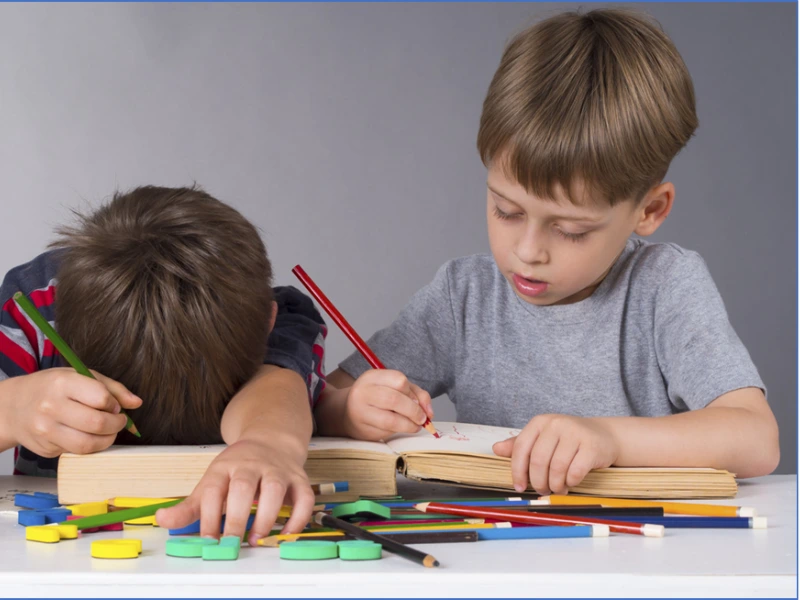
Numerous studies also say the same thing: learners need to get their hands on real work. They further add that if you are doing something like the OTHM, you will have to spend more time on workshops and real-life projects. This will ensure that the hard parts seem much easier.
Moreover, if you get help from an assignment writing service, all you must do is stay active and listen. Then try explaining your ideas out loud or drawing them out on paper. When you turn a lesson into an activity, it stops being a boring task and starts being a skill you actually own.
Challenges Faced by Tactile and Kinesthetic Learners
Here is a quick reminder that it isn’t always easy when you learn best by moving. Most classrooms want you to sit still and listen for hours, which can feel like a real struggle.
But, as you are wired to be active, sitting through long lectures or taking those long, silent tests can be really draining. These traditional formats usually focus on watching and listening, which ignores how your brain actually works.
Moreover, you might find that you need more time to touch things or try them out before a concept finally clicks. Surveys reveal that without that physical connection, many students feel restless or as if they are falling behind, even though they are just as smart as everyone else.
So, here’s What You Can Do as a Learner
To make things easier, you can try taking quick breaks to walk around or stretch, so that your brain doesn’t fall asleep. Other times when you are at your desk, use flashcards you can flip or small models you can hold while you study.
These small movements keep your body engaged and your mind focused. Apart from this, the best way to learn is to take what’s in your book and try it in real life whenever you can. All in all, if you can turn a boring lesson into a physical task or a hands-on project, you might as well find it more interesting.
FAQs
Q1: Can these learners adjust to traditional classrooms?
Yes, they may if the additional support, such as interactive activities or study aids, is provided.
Q2: How can assignment writing be adapted for these learners?
It can be adapted by using diagrams, flowcharts, and physical brainstorming sessions.
Q3: Are tactile and kinesthetic styles suitable for higher education?
Unquestionably yes! Many professional programs rely on practical engagement.
The Final Words
There is no harm in seeking academic help for your support, because a learner who grasps concepts by moving; it is your right to seek tools that match your personal learning style. So, do not let anyone tell you that you are wrong for using Tactile and Kinesthetic approaches. They are only going to make the information you absorb stay for longer.
Just let everyone say whatever they have to say, and engage as many of your senses as possible in learning. The only hack you need is watch, listen, and practice!

I write blogs for the Assignment Master AE. My focus is on empowering students through actionable advice, writing tips, and study support. I try to share educational insights that make complex topics easier to understand and apply.